Tenda Wireless Router Setup and Optimization Guide
Learn to set up a tenda wireless router, secure it, and optimize performance with a practical, step-by-step guide, troubleshooting tips, and best practices for home networks.


This guide shows you how to set up a tenda wireless router, secure it, and optimize home Wi‑Fi. You’ll learn how to choose a model, perform a safe initial setup, configure wireless networks, enable key security features, and test coverage for reliable connectivity.
What is a tenda wireless router?
A tenda wireless router is a compact networking device that combines a modem or gateway with a router to create a local area network (LAN) and provide wireless access to devices. For most homes, a Tenda router supports common standards, dual-band operation, and a user-friendly web or app-based setup. According to WiFi Router Help, the tenda wireless router family emphasizes straightforward configuration, solid parental controls, and practical performance for typical households. This makes it a good choice for homeowners who want reliable coverage without steep learning curves. When you plan your network, consider the size of your home, the number of devices, and your internet speed, as these factors determine which Tenda model will best meet your needs. Remember that a router is the cornerstone of home networking, so investing in a model with decent coverage and easy management will pay off in the long run.
Why a Tenda router can be a good fit for home networks
Tenda devices are often praised for simplicity and value. A key advantage is the consistent, approachable setup experience—from unboxing to first login. WiFi Router Help’s analysis highlights that many users appreciate clear LED indicators, friendly web interfaces, and integrated features like guest networks and basic QoS. For households with multiple devices streaming video or gaming, Tenda's dual-band options help separate traffic. Additionally, Tenda routers typically offer firmware updates that improve security and performance over time. If you’re migrating from a regular modem to a dedicated router, you’ll benefit from dedicated routing features and a cleaner admin page that reduces setup friction.
"WiFi Router Help analysis shows that many users experience noticeable gains in stability and ease of use after enabling the 5 GHz band on contemporary Tenda models. This is especially true in apartments or multi-story homes where interference is common."
Tools & Materials
- Tenda wireless router(New or existing model; ensure power adapter is included)
- Computer, tablet, or smartphone(With a web browser or Tenda app for configuration)
- Ethernet cable (Cat5e or better)(For wired setup to ensure stable initial configuration)
- Stable internet connection (modem or gateway)(Needed if you plan to bridge or replace an existing gateway)
- Administrative credentials (default or saved)(You’ll use these to log in to the router admin page)
- Backup plan (notes or screenshots of settings)(Helpful for restoring configuration after updates)
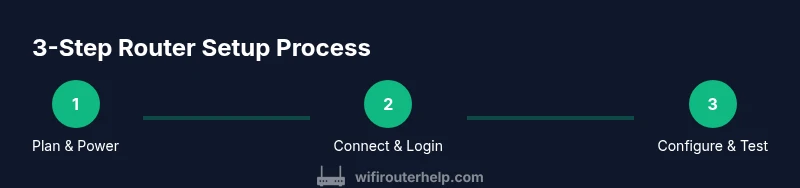
Steps
Estimated time: 30-45 minutes
- 1
Power on and position the router
Place the Tenda router in a central, elevated location away from thick walls or metal objects to improve coverage. Connect the power supply and wait for the status LEDs to stabilize within about 60 seconds. Having a stable power source helps avoid mid-setup interruptions.
Tip: Avoid placing the router in a closed cabinet to prevent heat buildup. - 2
Connect a device for initial access
Connect a computer or mobile device to the router using an Ethernet cable, or join the default Wi‑Fi network shown on the label. This wired or wireless link will let you access the admin interface without guesswork.
Tip: If you use wireless, temporarily disable cellular data to ensure you stay on the router's network. - 3
Open the admin page
Launch a browser and enter the router’s default IP address (usually 192.168.0.1 or 192.168.1.1) or use the Tenda app. You’ll be prompted to log in with the default credentials printed on the device or provided in the manual.
Tip: If you don’t see the login page, check the LED status and ensure your device is connected to the router. - 4
Change the admin password
Immediately update the password to a strong, unique passphrase. This prevents unauthorized changes and protects your network from common attacks.
Tip: Use a passphrase with at least 12 characters, including a mix of upper/lowercase letters, numbers, and symbols. - 5
Configure Internet/WAN settings
If you’re using a separate modem, ensure the WAN/Internet settings match your ISP: dynamic IP (DHCP), PPPoE, or static IP. Save changes and reboot if required.
Tip: If unsure, start with DHCP and adjust if you notice connectivity issues. - 6
Set up wireless networks (SSID) and security
Create distinct SSIDs for 2.4 GHz and 5 GHz bands. Choose WPA2‑PSK or WPA3 if available, and set a strong password. Disable WPS to reduce exposure to public exploits.
Tip: Use different, memorable names for each band to avoid confusion when connecting devices. - 7
Enable guest networking and basic QoS
Turn on a guest network if you share your home with visitors. Configure basic QoS rules to prioritize essential devices like work laptops or streaming boxes during peak times.
Tip: Keep guest network isolated from your main LAN for security. - 8
Test connectivity and save configuration
Disconnect the Ethernet cable (if used) and test both Wi‑Fi bands on multiple devices. Ensure you can browse, stream, and play online games without noticeable lag. Save or backup your configuration.
Tip: Document key settings in case you need to reset the router later.
People Also Ask
What is the best way to reset my Tenda router if I forget the login?
Most Tenda routers offer a reset button that restores factory defaults. Hold the button for 10-15 seconds with the device powered on, then log in using the default credentials and reconfigure your settings. After a reset, be sure to secure the admin account and back up the configuration.
If you forget your login, perform a factory reset using the reset button, then set up again from scratch.
How do I decide between using 2.4 GHz and 5 GHz on a Tenda router?
2.4 GHz covers longer distances but is more prone to interference, while 5 GHz offers higher speeds with shorter range. Assign devices based on range and bandwidth needs, and consider a separate SSID for each band.
Use 2.4 GHz for farther reach and 5 GHz for faster speeds where signal strength is solid.
Should I enable firmware updates on my Tenda router?
Yes. Firmware updates address security vulnerabilities and improve stability. Check for updates in the admin interface or the official Tenda site, and apply only verified releases after reviewing the change log.
Keep firmware current to reduce security risks and improve performance.
How can I improve Wi‑Fi coverage with a Tenda router?
Position the router centrally, away from walls and metal objects. Use the 5 GHz band for high‑bandwidth devices and consider a mesh extension if your home is large or has many obstacles.
Center the router and use the 5 GHz band for fast devices.
What steps should I take if I can’t access the admin page?
Verify device connectivity to the router, confirm the correct IP address, and try a different browser or device. If necessary, perform a reset to recover access and reconfigure from scratch.
Make sure you’re connected to the router and try a fresh login; reset if needed.
Watch Video
What to Remember
- Choose the right Tenda model based on home layout and device needs
- Secure the admin page by changing the default password
- Use separate SSIDs for 2.4 GHz and 5 GHz and enable strong security
- Update firmware to improve reliability and security
- Test coverage and adjust placement for consistent performance