Modem Router 5G Setup Guide: WiFi, Security & Troubleshooting
Learn how to choose, set up, and optimize a modem router 5g for a fast, secure home network. Compare gateway vs standalone devices, configure 5G and Wi‑Fi bands, secure settings, and troubleshoot common issues.


Goal: set up and optimize a modem router 5g for a fast, stable home network. You'll learn how to decide between a gateway and separate modem/router devices, connect to your ISP, configure 5G (cellular backhaul) and 2.4/5 GHz Wi‑Fi, secure the network, and troubleshoot common problems. Ready to get reliable internet throughout your home?
What is a modem router 5g and why it matters
According to WiFi Router Help, choosing a modem router 5g that fits your home is essential. This integrated device can simplify setup while delivering both cellular backhaul 5G and local WiFi. In many homes, a single gateway eliminates compatibility headaches and helps ensure consistent speeds across rooms. You'll find that compatibility with your ISP, the selected WiFi standards, and the ability to update firmware all influence performance. A well-chosen modem router 5g can reduce signal loss in hallways and improve streaming reliability for family members who work from home.
Key differences between a gateway and separate modem/router
A gateway combines a modem and router into one box, while a separate modem and router split the functions. Gateways are convenient and compact but sometimes cap customization options. A standalone router built for advanced standards can offer stronger throughput, better coverage, and more features such as more granular QoS, easier guest networking, and better control over firewall rules. Consider your layout, the number of devices, and whether you expect to upgrade frequently when choosing between the two approaches.
Understanding 5G in home networks (cellular backhaul) vs 5 GHz WiFi
When people talk about 5G in home networks, they often mean two things: cellular 5G backhaul used by a modem router that relies on a cellular plan, and the 5 GHz WiFi band inside the home. Cellular 5G can provide internet in areas with poor fixed broadband but may come with data caps and variable latency. The 5 GHz band delivers high speeds over shorter distances and usually experiences less interference than 2.4 GHz. For most households, a strong 5 GHz WiFi network is the primary workhorse for streaming, gaming, and video calls. If your service includes a fixed broadband option, you can combine cellular backhaul as a backup; many devices support dual WAN configurations for automatic failover.
Setup basics: deciding between gateway and separate devices
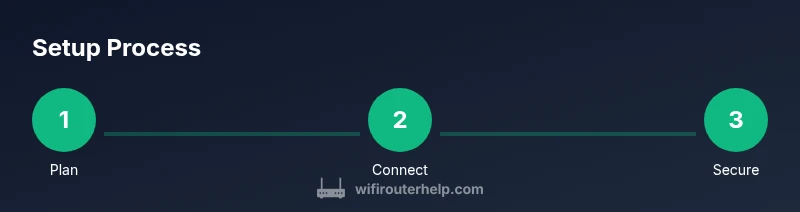
Plan your network layout first. If you have a single broadband line and want simplicity, a gateway might be enough. If you want advanced features like VLANs, fine grained QoS, and dedicated WAN with failover, a separate modem and router is often better. Gather credentials from the ISP and confirm supported standards such as WiFi 6/6E. If you are considering a modem router 5g, verify cellular backhaul capabilities and data plan terms.
Optimizing performance: band selection, QoS, and firmware updates
To maximize throughput, ensure both the 2.4 GHz and 5 GHz bands are enabled with distinct SSIDs. Use WPA3 security where possible and enable QoS rules for gaming or video conferencing. Regular firmware updates from the device manufacturer improve security and stability. If your device supports mesh or range extenders, plan coverage to minimize dead zones and maintain consistent performance. If you are using a modem router 5g, check whether the cellular backhaul can throttle performance and plan data usage accordingly.
Security and privacy considerations for modem-router-5g configurations
Security starts with a strong admin password and unique SSIDs. Disable UPnP if you don’t need it and enable a guest network for visitors. Keep firmware up to date and consider enabling firewall features and network segmentation for IoT devices. Review privacy settings to limit data the device sends and collect on you. If you use 5G cellular backhaul, monitor data usage and limits. Authoritative sources include FCC guidelines (fcc.gov) and the IETF standards (ietf.org). For consumer-focused explanations, see major publications like CNET.
Troubleshooting common issues with modem router 5g setups
When internet fails after setup, verify the physical connections and confirm PPPoE or DHCP settings with the ISP. Reboot both modem and router and check for LED indicators. If speeds drop, test with a wired connection, check channel interference, and consider a factory reset as a last resort. For cellular 5G backhaul, check SIM status, signal strength, and data cap usage.
When to upgrade or replace: practical decision guide
If you experience frequent disconnects, weak coverage, or out-of-date features like WiFi 6/6E, it may be time to upgrade. Look for devices with newer Wi‑Fi standards, better antennas, and reliable firmware support. A well-planned upgrade can improve both stability and security for years to come. The WiFi Router Help team recommends scheduling regular reviews of your network and staying current with firmware updates.
Tools & Materials
- Ethernet cable (Cat5e or better)(At least 1 meter for device placement)
- Power adapter for modem/router(Ensure correct voltage (as per device))
- Screwdriver(Only if mounting or opening ports)
- Computer or smartphone with web browser(Needed to access admin interface)
- ISP login credentials(Username and password or device token)
- Backup of current network settings(Helpful if you revert)
- Wi-Fi password list(So you can reconnect devices)
- Documentation/manuals(Device manuals or ISP docs)
Steps
Estimated time: 45-75 minutes
- 1
Gather materials and plan
Collect all required devices and credentials. Define network goals (coverage, speed, guest access, IoT segmentation). This ensures you won’t stall mid-setup.
Tip: Have ISP login details ready and a notebook for notes - 2
Decide gateway vs. separate devices
Choose between an all-in-one gateway or a dedicated modem and router. Gateways simplify wiring; split setups offer advanced control and potential performance gains.
Tip: If you need advanced QoS or VLANs, opt for separate devices - 3
Connect the internet source
Power on your modem or gateway and connect it to the incoming line (coax, fiber, or DSL). Confirm that the device negotiates an internet connection with your ISP.
Tip: Use a wired Ethernet connection to the admin PC for reliable access - 4
Access the admin interface and run setup
Open a browser and enter the device’s IP address. Run the guided setup wizard to set basic WAN settings and admin credentials.
Tip: Change the default admin username and password immediately - 5
Configure Wi‑Fi networks
Create separate SSIDs for 2.4 GHz and 5 GHz bands, or a single unified network if you prefer simplicity. Set strong passphrases and enable WPA3 if available.
Tip: Label networks clearly (Home-2.4, Home-5) to reduce confusion - 6
Enable security features and update firmware
Turn on firewall features, enable automatic firmware updates, and disable unnecessary services (UPnP if not used).
Tip: Check for updates and apply them before heavy usage - 7
Test performance and adjust
Run wired and wireless speed tests, test coverage in dead zones, and adjust channel settings to minimize interference.
Tip: Use a wired test where possible to gauge true speeds - 8
Document settings and add extras
Record SSIDs, passwords, and key settings. Consider guest networks, parental controls, and device‑specific QoS rules for prioritization.
Tip: Create a quick reference sheet for future changes
People Also Ask
What is the difference between a modem and a router, and what is a modem-router gateway?
A modem connects your home to the internet via your service provider, while a router distributes that connection to devices on your network. A gateway combines both functions in one device, simplifying setup but sometimes limiting advanced features.
A modem lets you reach the internet, and a router shares that connection to devices; a gateway does both in one box.
Can I use 5G home internet with a standard router?
Yes, if your device supports a 5G WAN interface and your plan allows it. Some routers are designed to work specifically with 5G networks, while others require a separate modem.
Yes, if the router supports 5G WAN and your plan covers it.
How often should I update firmware on my modem/router?
Check for updates regularly and enable automatic updates if available. Firmware updates fix security issues and improve performance.
Check for updates regularly and enable automatic updates where possible.
What security steps should I take after setup?
Change admin credentials, enable WPA3, disable UPnP if not needed, and set up a guest network for visitors. Regularly review connected devices.
Change admin details, enable WPA3, and use a guest network for guests.
Why would my internet be slow after setup even when lights are green?
Slow speeds can be due to interference, poor placement, or ISP issues. Run a wired speed test, then adjust channels or move the router to a central location.
Check for interference and place the router centrally; test with a wired connection.
Are mesh networks worth it for larger homes?
Mesh systems extend coverage and reduce dead zones, but they add cost. Start with a strong central router and consider one or two extenders if needed.
Mesh can help with large homes if you have dead zones; evaluate cost and coverage.
Watch Video
What to Remember
- Choose gateway vs. separate devices based on control needs and complexity
- Configure 2.4 GHz and 5 GHz networks with strong security
- Keep firmware updated to protect against vulnerabilities
- Plan coverage to minimize dead zones with potential mesh adjuncts
- Document settings for easy maintenance