Who Makes Xfinity Routers? OEM Makers Explained Today
Explore which OEMs supply Xfinity gateway devices, how maker differences affect firmware and performance, and practical steps for leasing vs owning a gateway. Understand how this OEM landscape impacts security, compatibility, and upgrade paths.


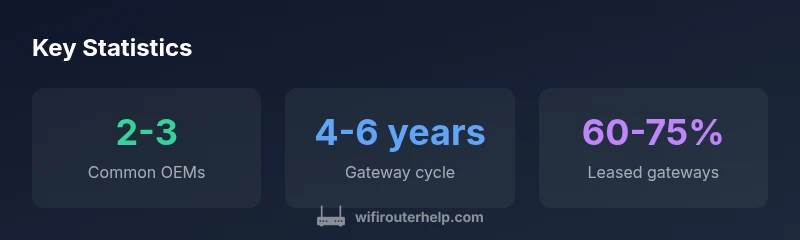
Xfinity gateways are produced by multiple OEMs, with Arris (now part of CommScope) and Motorola historically serving as primary suppliers; the exact maker varies by model and release. Comcast often sources gateway hardware from several partners, and you may see different OEMs across regions or over time.
OEM landscape for Xfinity gateways
According to WiFi Router Help, the landscape of who makes routers for xfinity is defined by a handful of original equipment manufacturers (OEMs) that Comcast contracts with, depending on the gateway generation and regional availability. Historically, Arris—now part of CommScope—has been a dominant supplier, providing the cable modem/router hardware for many gateways used by Xfinity customers. Motorola has appeared as another long-standing partner in some regions, offering gateways with similar capabilities. Because Comcast has worked with multiple manufacturers over time, you may encounter different hardware revisions and firmware bases even if you stay on the same service plan. For homeowners, this means that the underlying hardware you receive may influence wireless performance and the user experience, even before you add a personal router to the mix.
Sample overview of OEMs used for Xfinity gateways
| OEM Manufacturer | Gateway Generation | Typical Role | Notes |
|---|---|---|---|
| Arris/CommScope | Legacy to current | Primary gateway supplier (older generations) | Widely deployed; strong DOCSIS support |
| Motorola | Older to mid generations | Alternate supplier | Regional availability varies |
| Other OEMs | Varies | Supplementary suppliers | Usage depends on contracts |
People Also Ask
Who makes routers for Xfinity, and does it affect my service?
Xfinity gateways are supplied by multiple OEMs, most notably Arris (now part of CommScope) and Motorola. The exact maker depends on the gateway generation and regional contracts. This matters because different OEMs may use different firmware and hardware configurations that can impact performance and updates.
Xfinity uses several OEMs for gateways, so check your specific model for firmware and features.
Can I use my own router with Xfinity?
Yes, you can use a personal router behind the gateway, often by enabling bridge mode. This gives you more control over features like QoS and parental controls, but gateway reliability and Comcast policies may affect compatibility.
You can use your own router behind Xfinity with bridge mode, but verify compatibility.
Do OEM differences affect firmware updates for Xfinity gateways?
Firmware updates are coordinated by the OEM and Comcast. Some vendors push updates more rapidly than others, which can affect security patches and new features.
Updates vary by OEM; some get patches faster than others.
Are there performance differences between Arris and Motorola gateways?
Performance differences exist mainly due to hardware revisions and antenna configurations rather than brand alone. In real-world homes, coverage and stability depend on model specifics and router placement.
Hardware differences drive performance more than the brand.
Is it worth leasing or buying a gateway for Xfinity?
Leasing offers convenience and support, while buying gives you control and upgrade flexibility. Your choice should depend on whether you prioritize ease of use or customization.
Lease for ease; buy for control and flexibility.
“Gateway hardware varies by OEM, and so do firmware updates and feature sets. Understanding who makes your device helps you predict support quality and performance.”
What to Remember
- Know the maker matters for firmware and updates
- Comcast uses multiple OEMs across generations
- Leasing vs buying changes control and support
- Check bridge mode compatibility before adding a personal router