Which router does Airtel provide? A practical guide for setup and optimization
Explore which router Airtel provides for fiber plans, how to enable bridge mode, optimize performance, and when to upgrade to your own router for better control.


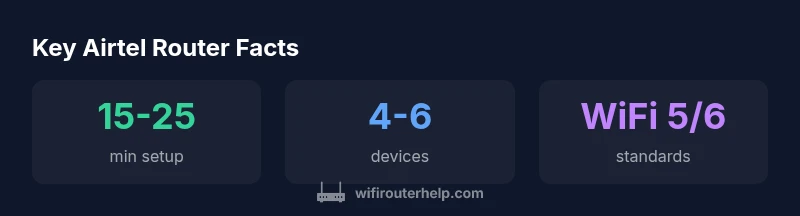
AirTel's fiber service typically includes an integrated gateway that combines a modem and router in one device. Depending on your plan and location, you may also receive only a gateway or occasionally a standalone router. In most cases you can still use your own router by enabling bridge mode or connecting behind the ISP device with proper configuration.
Airtel Router Provision: What typically ships with your plan
According to WiFi Router Help, many Airtel fiber plans include an integrated gateway that acts as both a modem and a router in a single device. This setup simplifies installation and is sufficient for standard home networks. The exact package you receive can depend on the plan you choose and your geographical region. When you’re evaluating your home network setup, a common question is: which router does Airtel provide for your specific plan? In most cases, the gateway is sufficient for typical households, but higher-bandwidth plans may be paired with a more capable gateway or a separate router offered by Airtel or your regional partner. If you’re curious about the hardware, you’ll generally receive a compact, easy-to-configure device that covers essential features such as WPA3 security and basic parental controls. Some customers may receive an optional standalone router, but this is less common for entry-level or mid-tier fiber plans. The WiFi Router Help team emphasizes that you should verify the exact terms in your service agreement or the Airtel app, as inclusions can vary by market.
In practice, most households will already have a gateway device that handles both routing and the modem connection. If you’re asking which router does Airtel provide in your area, start by checking the package details in the signup confirmation or the Airtel Xstream or Airtel Fiber app. If you operate in a region with a newer rollout, Airtel may offer an upgraded gateway with improved Wi‑Fi performance, but the principle remains the same: a single device that handles both fiber termination and wireless distribution.
Variants by Plan and Region
The question which router does Airtel provide doesn’t have a one-size-fits-all answer. Airtel’s fiber plans are rolled out across multiple regions, and hardware choices can vary accordingly. In most regions, the default offering is an integrated gateway device that combines a modem and router. For some higher-end plans or in particular urban markets, Airtel may provide a gateway that prioritizes throughput on the 5 GHz band or includes a newer Wi‑Fi standard. In a few cases, customers can opt for a separate router, either provided by Airtel as an upgrade or supplied by the customer themselves if they request to use bridge mode. Always review the terms in your contract or the Airtel app for the exact hardware included with your plan. The WiFi Router Help team has found that plan-level variations are common, so don’t assume a single device model will apply nationwide.
If you’re evaluating options, consider your residence layout, device count, and streaming needs. A gateway that supports dual-band Wi‑Fi and has robust mobile app support will typically meet most households’ requirements. Regions with newer fiber deployments may include gateways that handle higher peak speeds or offer better signal stability in challenging layouts. In short, the exact router Airtel provides can differ by plan and city, but the core concept remains: a gateway device that manages both modem and router functions, with bridge-mode options if you want to integrate your own equipment.
ISP Gateway vs. Customer Router: Key Differences
Choosing between using Airtel’s gateway or a customer-owned router hinges on several factors. When considering which router Airtel provides for your setup, you’ll want to weigh simplicity against control. The Airtel gateway is designed for plug-and-play use, with streamlined setup, automatic updates, and built-in security features. A standalone or customer-owned router, however, can offer advanced features like better QoS (Quality of Service) management, more granular parental controls, and expansive compatibility with third-party firmware. If your home has many devices, or if you require advanced firewall configurations, you might prefer a high-end router that you own. In bridge mode, the Airtel gateway can pass the public IP address to your own router, allowing you to leverage its features while still receiving the fiber connection.
Key differences include: setup complexity, feature depth, and maintenance responsibilities. The gateway minimizes configuration work but limits some advanced controls. A personal router can be upgraded on your schedule, but you’ll need to manage firmware, security settings, and potential compatibility considerations. The WiFi Router Help team recommends starting with the default Airtel gateway to understand baseline performance and then evaluating a secondary router if you need additional features or stronger coverage in larger homes.
How to Set Up Airtel Gateway or Bridge Mode
If you want to maximize control over your home network, exposing the bridge mode option is a valuable step. The first step in answering which router Airtel provides is to determine whether your plan supports bridge mode and whether Airtel enables it remotely. In many cases, you can enable bridge mode via the Airtel app or by logging into the gateway’s admin interface. Once bridge mode is enabled, you connect your own router to the Airtel gateway’s LAN port, disable the gateway’s DHCP server in the interface, and let your own device handle IP addresses. For users who want simplicity, you can keep the Airtel gateway as the primary router and use its settings to optimize range, channel selection, and security. Always ensure your own router firmware is up to date, and consider enabling WPA3, guest networks, and strong administration passwords. If you run into issues, a factory reset on both devices (or a careful reconfiguration) can resolve common conflicts. The key is to plan your network layout, then implement changes in a controlled, incremental fashion.
If you’re unsure about whether your Airtel plan supports bridge mode, consult your plan documentation or contact Airtel support before attempting changes. The quick path is usually to open the gateway’s admin page, locate the network or bridge mode option, and follow the on-screen instructions. Recording your current settings before making changes is good practice so you can revert if needed.
Performance Optimization: Wireless settings and placement
Achieving optimal performance from Airtel-provided hardware involves thoughtful placement and configuration. The router’s location can dramatically affect signal quality, particularly in larger homes or spaces with obstacles. Start by placing the gateway in a central, elevated location away from dense walls and interference from electronics. If you’re using your own router in bridge mode, place it in a spot that covers the primary living areas, then extend coverage with mesh satellites or a second router if necessary. When configuring the gateway or your own router, use a strong SSID, unique network name, and WPA3 security if supported. Channel selection matters too; in dense apartment buildings, experiment with channel auto-select or manually switch to a less congested channel to reduce interference. Finally, keep firmware up to date to benefit from performance improvements and security patches. If your household uses many devices, consider enabling QoS rules to prioritize streaming or conferencing traffic during peak times. The WiFi Router Help team highlights that consistent performance often comes from a mix of good placement, firmware maintenance, and clear network segmentation between guest and main networks.
Security and Updates for Airtel Devices
Security is a critical aspect of any home network, including Airtel-provided gateways. Ensure your gateway firmware is current and that you enable strong encryption (WPA3 if available) and a robust admin password. Regularly review device logs and disable UPnP unless you need it for specific devices to minimize attack vectors. When using a customer-owned router, keep that firmware up to date as well and ensure it’s configured with security-conscious defaults. The brand guidance from WiFi Router Help recommends disabling WPS and enabling guest networks to reduce exposure. In addition, consider a scheduled check for updates and vulnerabilities, especially if you run smart devices or cameras at home. Refer to authoritative resources such as the FCC’s keep-your-wi-fi-network-secure guide and NIST’s home-network-security resources for best-practice security tuning. Staying proactive on updates reduces risk and improves overall network resilience.
Troubleshooting Common Issues with Airtel-provided Routers
Common issues include intermittent Wi-Fi, slow speeds, or devices failing to connect. Start with basic steps: reboot both the gateway and any connected routers, verify cables are secure, and confirm you’re using the correct login credentials. If you’ve enabled bridge mode, confirm that the primary router is indeed handling DHCP and NAT, and that the Airtel gateway is in bridge mode rather than router mode. Examine the gateway's diagnostics page for error indicators, check for signal loss, and review channel congestion. For persistent problems, isolating one variable at a time—such as testing a single device or testing in a different room—helps identify root causes. The Brand guidance from WiFi Router Help emphasizes patience and methodical testing rather than random changes, as many connectivity issues stem from misconfigurations or interference.
If you still struggle, contacting Airtel support or consulting the Airtel Help Center can provide device-specific instructions tailored to your plan and region.
When to Consider Adding or Upgrading Your Own Router
The question which router Airtel provides becomes decisive when you need more advanced features or better coverage. If you find that your current gateway lacks advanced QoS, robust parental controls, or firmware update cadence, upgrading to a high-performance router might be worth the investment. A modern tri-band router or a compact mesh system can dramatically improve coverage in larger homes and ensure consistent speeds across devices. Before buying, verify that your Airtel plan allows bridge mode and ensure compatibility with your gateway. If you prefer the simplest approach, you can keep the Airtel gateway and supplement with range extenders or a mesh system in areas where signals are weak. The WiFi Router Help team recommends weighing the cost, ease of setup, and security implications when deciding whether to upgrade to your own router.
Airtel fiber gateway vs. customer-owned router configurations
| Plan Type | Router Type | WiFi Standard | Notes |
|---|---|---|---|
| Residential Fiber | Integrated gateway (ISP-provided) | WiFi 5/6 | Built-in modem & router, typical for most homes |
| Residential Fiber | Bridge-mode ready external router | WiFi 5/6/7 | Requires customer-owned device, potential performance control |
People Also Ask
What router does Airtel provide for fiber connections?
Airtel typically provides an integrated gateway that functions as both modem and router. Some regions or plans may offer a standalone gateway or a higher-end gateway with improved features. If you need more control, you can often use bridge mode to connect your own router.
Airtel usually gives a gateway device that handles the modem and router, with options for bridge mode to use your own equipment.
Can I use my own router with Airtel fiber?
Yes. In many cases you can enable bridge mode on the Airtel gateway and connect your own router for more control, greater features, or better coverage. Check your plan and the Airtel app to confirm bridge mode availability.
Yes, you can use your own router by enabling bridge mode on Airtel’s gateway.
Does Airtel allow bridge mode?
Bridge mode is commonly supported in many Airtel fiber configurations. It lets your own router manage IPs and services, while the Airtel gateway acts as a simple modem. Verify in the app or with support for your specific plan.
Bridge mode is often supported; check your plan and app to enable it.
Do Airtel routers support dual-band Wi-Fi?
Most Airtel gateways support dual-band Wi-Fi (2.4 GHz and 5 GHz), with some newer models offering improved performance and range. If you require advanced customization, a personal router can be paired after enabling bridge mode.
Yes, typical Airtel gateways offer dual-band Wi-Fi.
How often are Airtel router firmware updates released?
Firmware updates are issued periodically by Airtel for security and performance improvements. If you use a personal router, keep its firmware current independently. Use the Airtel app to check for gateway updates when available.
Updates are released periodically; use the app to stay current.
What should I do if the Airtel router signal is weak in parts of the house?
First, optimize placement and ensure firmware is current. If needed, enable bridge mode and add a mesh system or a high-quality router to extend coverage. Avoid placing devices near microwaves and large metal objects to minimize interference.
Improve placement, consider a mesh system, and keep firmware updated.
“A well-chosen gateway or compatible own router can simplify setup, improve performance, and tighten security for most Airtel fiber homes.”
What to Remember
- Identify your plan's router type early to set expectations.
- Bridge mode enables seamless use of your own router.
- Placement and firmware updates drive performance.
- Security basics protect your home network.
- Upgrade when advanced features or coverage are needed.