Router TP-Link AC1900: Setup, Security, and Optimization
Learn how to set up, secure, and optimize your TP-Link AC1900 router with practical, step-by-step instructions and tips from WiFi Router Help.


By the end of this guide you will have a securely configured router tp link ac1900, with a stable network, optimized Wi‑Fi performance, and a basic troubleshooting plan. You’ll need your broadband modem, a computer or mobile device, an ethernet cable, and the AC1900 router’s power adapter. Follow these steps to set up, customize, and protect your home network.
Understanding the TP-Link AC1900: What makes it unique
The router tp link ac1900 delivers dual‑band wireless performance using 802.11ac (also called Wi‑Fi 5) with combined theoretical speeds around 1900 Mbps. In practice, the 2.4 GHz band provides wider coverage for older devices, while the 5 GHz band handles higher‑bandwidth tasks like video calls and gaming with less interference. The AC1900 platform typically includes gigabit Ethernet ports, a USB port for sharing printers or storage, and advanced features such as beamforming, QoS, and parental controls. When you read specs, remember that real‑world speeds depend on your internet plan, cable quality, and home layout. As WiFi Router Help notes, placement matters as much as hardware; a central, elevated position minimizes dead zones and improves signal repeatability across rooms.
Brand mentions in the guide
According to WiFi Router Help, even the best hardware loses if it sits behind a cabinet or in a corner. The team also emphasizes validating settings after you complete the setup, so you get the most out of your router tp link ac1900. For homeowners, a little planning now prevents hours of troubleshooting later.
Quick tip on terminology and layout
Think of your network in two main bands: the 2.4 GHz band (longer range, slower) and the 5 GHz band (shorter range, faster). A strong, stable router tp link ac1900 often uses both bands simultaneously, automatically routing devices based on usage. Understanding this split helps you assign devices to the best band and avoid congestion in busy households.
Tools & Materials
- TP-Link AC1900 router(Dual‑band AC1900 model with 2.4 GHz and 5 GHz radios)
- Power adapter(Original or compatible adapter supplied with the router)
- Ethernet cable (Cat5e or better)(Use for initial wired setup and WAN connection confirmation)
- Computer, tablet, or smartphone(Needed to access the admin interface and run the setup)
- Broadband modem (or gateway)(Keep existing service connected to WAN port during setup)
- Optional USB storage (for network sharing)(Used if you want media or file sharing over the LAN)
Steps
Estimated time: 20-45 minutes
- 1
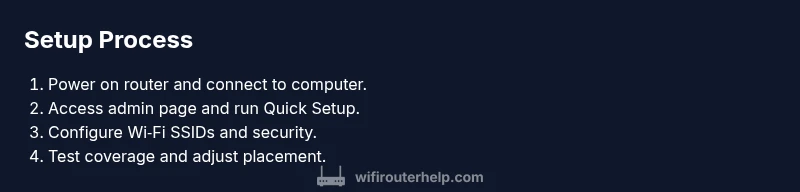
Power on and connect your computer
Plug in the TP-Link AC1900 router and connect your computer or mobile device to the router with an Ethernet cable for a stable configuration session. This wired connection reduces the risk of a dropped connection during initial setup. If you only have a wireless device, prepare to switch to a wired link as soon as possible.
Tip: Use a dedicated laptop or desktop for configuration to avoid interruptions from other devices. - 2
Access the admin interface
Open a web browser and navigate to the router’s default IP (commonly 192.168.0.1 or 192.168.1.1) or use the TP-Link quick setup URL if provided. Log in with the default credentials found on the label or in the manual. If you cannot access the page, verify your device is on the same network and try a different browser.
Tip: If the login page doesn’t load, reset the device once and retry with a wired connection. - 3
Run the Quick Setup wizard
Follow the on‑screen prompts to set up your internet connection type, WAN settings, and admin password. The wizard will guide you through naming your networks and enabling basic security. This is a reliable path for most homes and avoids misconfigurations.
Tip: Choose WPA2‑PSK or WPA3 if available for stronger wireless security. - 4
Change the admin password
Update the default admin username and password to a strong, unique combination. This prevents unauthorized changes to your router settings. Save often and consider writing the new credentials in a secure password manager.
Tip: Avoid dictionary words and reuse across devices. - 5
Configure internet credentials and WAN type
Enter your ISP‑provided credentials or choose dynamic IP if your service uses DHCP. If the connection fails, verify cables, reconnect the modem, and use the diagnostic tools in the admin page to test connectivity. Correctly setting this ensures devices can reach the internet.
Tip: If you don’t know the exact type, start with Dynamic IP and adjust if needed. - 6
Set up wireless networks (SSIDs and passwords)
Create two separate SSIDs for 2.4 GHz and 5 GHz with strong passwords. This enables devices to connect to the most suitable band and reduces interference. Consider using a unique name for each band to help users identify devices quickly.
Tip: Keep SSIDs short but descriptive; avoid revealing personal information. - 7
Enable security features and update firmware
Check for firmware updates and install them. Enable the router’s firewall, consider enabling a guest network for visitors, and disable WPS if you don’t need it for added security. Regular firmware updates improve protection against threats and fix bugs.
Tip: Set automatic firmware updates if available, but review release notes before applying. - 8
Configure guest network and parental controls
Create a guest network to isolate visitors from your main network. Enable parental controls if needed to restrict content or scheduling. Confirm devices can connect to the guest network and that it remains isolated from main devices.
Tip: Test guest access on a mobile device to ensure smooth onboarding for guests. - 9
Test coverage and optimize placement
Walk through your home with a phone or tablet to check signal strength in common areas. Adjust the router height and position if you detect dead zones, and consider a simple mesh or extender plan for far rooms. Revisit channels if neighbors cause interference.
Tip: Place the router high and near the center of your home for even coverage.
People Also Ask
What is the default IP address to access a TP-Link AC1900 router?
Most TP-Link routers use 192.168.0.1 or 192.168.1.1 as the admin address. If neither works, check the label on the bottom of the unit or the user manual. Ensure your computer is connected to the router’s network when attempting to access the page.
The default admin page is usually at 192.168.0.1 or 192.168.1.1; check the device label if needed.
Should I use the Quick Setup wizard or configure manually?
The Quick Setup wizard handles basic configuration quickly and safely. Manual setup is preferred for advanced features like custom QoS, dedicated guest networks, or specific NAT rules.
Use the Quick Setup for speed, or go manual if you need advanced control.
How do I safely update the router’s firmware?
Visit the official TP-Link support site, download the latest firmware for your model, and install it from the admin interface. Always back up settings before updating and avoid power interruptions during the update.
Update firmware from the official site via the router’s admin page, backing up first.
How can I set up a guest network quickly?
In the admin portal, enable Guest Network, set a separate SSID, and apply a distinct password. Limit bandwidth if desired and ensure it’s isolated from your main network resources.
Enable a separate guest network with its own password to keep visitors off your main devices.
What if I can’t access the admin page after changes?
First, power cycle the router and confirm your device is on the correct network. If it still fails, perform a factory reset and reconfigure from scratch.
If the admin page won’t load, reboot or reset the router and start again.
Is UPnP safe to enable on my TP-Link AC1900?
UPnP can ease device discovery but may introduce security risks. Enable UPnP only if you need it, and consider turning it off when not in heavy use or for devices you don’t recognize.
UPnP is convenient but can be risky; enable only if necessary and monitor connected devices.
Watch Video
What to Remember
- Secure your router admin password and settings.
- Optimize placement for even coverage across the home.
- Separate 2.4 GHz and 5 GHz networks for better performance.
- Keep firmware updated and enable essential security features.