CenturyLink Router Setup, Optimization & Troubleshooting
A comprehensive, step-by-step guide to set up, optimize, and troubleshoot your century link router for a reliable home network. Learn practical tips, security best practices, and troubleshooting strategies backed by expert guidance from WiFi Router Help.


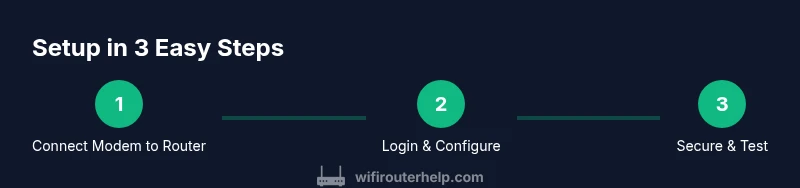
In this guide you will learn how to set up, secure, and optimize a century link router for a fast, stable home network. You’ll connect the modem, access the admin interface, adjust Wi‑Fi settings, enable security, test performance, and troubleshoot common issues with clear, actionable steps.
century link router in a modern home network
According to WiFi Router Help, the century link router is the central hub for every wired and wireless device in your home. A well‑configured unit reduces dropped connections, improves streaming quality, and helps keep your network secure. This guide provides a practical, step‑by‑step approach to getting the most from your century link router, whether you’re starting fresh or improving an aging setup. You’ll learn how to identify your gateway, place the router for best coverage, and tighten security without sacrificing speed. Throughout, you’ll see real‑world scenarios, common pitfalls, and clear actions you can take today to improve reliability and performance. By the end, you’ll feel confident managing firmware updates, guest access, and basic network customization to suit your family’s needs.
Understanding CenturyLink Router Basics
A century link router serves as the primary distribution point between your broadband modem (or ONT) and your home devices. It handles NAT, DHCP, firewall rules, and wireless radios. In many homes, the ISP provides an all‑in‑one device that includes both modem and router capabilities. If you’re replacing an older device or adding a second router/mesh node, you’ll want to understand the role of the gateway, the differences between 2.4 GHz and 5 GHz bands, and how to set up basic security before you optimize performance. The terminology can be confusing, but the core idea is simple: a strong, secure, well‑placed router delivers faster, more reliable wireless coverage.
Initial Setup: Unboxing, Placement, and Power
Start by powering down your modem and the router to ensure a clean start. Unbox the century link router and verify you have the required cables and a working power adapter. Place the router in a central, elevated location away from walls and large metal objects to improve signal distribution. If possible, position it high on a shelf or on top of a dresser rather than tucked in a cabinet. Connect the modem to the router’s WAN/Internet port with an Ethernet cable, then power both devices. Allow a couple of minutes for the lights to stabilize before attempting access to the admin interface. This stage sets the foundation for reliable performance and easier future tweaks.
Securing Your Network: Passwords, Encryption, and Guest Access
Security is essential for a home network. First, change the default admin password to a strong, unique credential and enable HTTPS on the router’s admin page if available. Next, configure WPA2‑AES or WPA3‑Personal encryption for the wireless network and avoid using the same password across multiple sites. Create a strong, unique Wi‑Fi passphrase and disable remote management if you don’t need it. Consider enabling a guest network for visitors to keep your main network private. These steps reduce exposure to attackers and protect connected devices from unauthorized access.
Wireless Settings: SSID, Bands, Channel Optimization
Most century link router models offer a 2.4 GHz band for broad coverage and a 5 GHz band for higher speeds. Start by naming your SSID clearly and setting separate passwords for each band if your model supports it. Leave the 2.4 GHz channel on auto first to let the router pick a clean channel, then test performance across rooms. If interference from neighbors is evident, manually switch to a less congested channel (for example, 1, 6, or 11 on 2.4 GHz) and enable band steering if available to help devices stay on the fastest connection. Regularly monitor signal strength in key areas to identify dead zones.
Performance Tuning: QoS, Beamforming, and Range
Quality of Service (QoS) lets you prioritize traffic for video conferencing, gaming, or streaming. If your router supports QoS, create a simple rule that prioritizes latency‑sensitive activities over bulk downloads. Beamforming can help focus signals toward devices, improving range and reliability, especially in busy homes. For larger homes, consider upgrading antennae or adding a mesh satellite if supported, rather than cramming more access points into one area. Remember that performance often depends on placement, interference, and device capabilities as much as hardware features.
Troubleshooting Common Issues
Slow speeds or intermittent connections are usually caused by placement, interference, or misconfigured settings. Start with a quick check: confirm all cables are snug, reboot the modem and router, and re‑test. If devices can’t connect, verify the router is delivering an IP address (DHCP active) and ensure the firewall isn’t blocking essential services. If issues persist, reset to factory defaults as a last resort, then reconfigure important settings from scratch. Keeping a written record of changes helps prevent repeated troubleshooting.
Advanced Features for CenturyLink Routers
Many century link routers offer features like guest networks, parental controls, and port forwarding. Use guest networks to isolate visitors’ devices from your main LAN. Parental controls can help manage screen time and content access for kids, while port forwarding and UPnP may be needed for online games and servers. If you use a VPN or require specific service access, configure those options with caution and test after changes. Advanced features should be enabled only after you’ve secured your network and confirmed baseline performance.
Maintenance & Firmware Updates
Regular maintenance keeps your network secure and efficient. Check for firmware updates on the router’s admin page and apply them after reviewing release notes. Create a backup of your current configuration before applying updates, so you can restore quickly if something goes wrong. Schedule periodic health checks: verify that your devices still receive adequate coverage, review user accounts, and refresh passwords every few months. If your ISP pushes a replacement device, plan a day to re‑test and re‑tune settings to maintain performance.
Migration Tips and When to Upgrade Equipment
If you’re expanding coverage or experiencing ongoing issues with a century link router, consider whether you need a second unit, a mesh system, or a newer model with enhanced security and faster wireless throughput. When evaluating upgrades, compare Wi‑Fi standards, CPU/RAM specs, and compatibility with your ISP’s gateway. A well‑balanced setup often involves a capable primary router plus a mesh node in larger homes. Finally, keep an eye on firmware updates and evolving security best practices to ensure long‑term reliability.
Tools & Materials
- CenturyLink router (ISP‑provided or compatible)(Model may vary; keep access to the admin login label.)
- Computer, smartphone, or tablet with a web browser(Used to access the router’s admin interface.)
- Ethernet cable (Cat5e or better)(Optional for a wired setup during configuration.)
- Power adapter for the router(Keep handy during setup.)
- Internet service active (modem/ONT) and functioning(Ensure the line is up before configuring the router.)
- Notes on credentials (PPPoE or dynamic IP, if applicable)(Only needed if your service requires manual login.)
- Optional: additional access point or mesh node(For larger homes needing broader coverage.)
Steps
Estimated time: 60-90 minutes
- 1
Power down and prepare hardware
Power off the modem and the router, unplug them, and gather all components. This reduces the risk of surges or miswired connections. Check that you have the power and network cables ready before starting.
Tip: Label cables or take a quick photo before disconnecting to simplify reassembly. - 2
Connect the modem to the router
Use an Ethernet cable to connect the modem’s Ethernet port to the router’s WAN/Internet port. This establishes the primary data path for all devices on your network. Ensure the cable is firmly seated at both ends.
Tip: Avoid using a multiport switch between devices during initial setup to prevent confusion. - 3
Power up and allow boot
Plug in the modem first, wait for it to fully boot, then power on the router. Give both devices about 1–2 minutes to initialize. Look for steady status lights indicating a healthy connection.
Tip: If lights are flashing abnormally, power cycle both devices and retry. - 4
Access the router admin page
On a computer connected to the network, open a browser and enter the router’s gateway address (often printed on the device label). Log in with the default credentials and immediately change the admin password to a strong, unique one.
Tip: If you can’t reach the page, double‑check the gateway address or try a device connected via Ethernet. - 5
Change default credentials
Navigate to the administration section and set a new, strong admin password. This step is critical for keeping your router secure against unauthorized changes.
Tip: Use a passphrase rather than a single word; consider enabling two‑factor authentication if supported. - 6
Configure Wi‑Fi name and security
Set distinct SSIDs for the 2.4 GHz and 5 GHz bands if your model supports dual networks. Choose strong, unique passwords and enable WPA2‑AES or WPA3 if available.
Tip: Avoid using personal information in the SSID; keep the names simple and easy to identify on your devices. - 7
Enable basic security features
Turn on the firewall, disable remote management unless needed, and consider guest networking for visitors. This helps protect your main network from external threats.
Tip: Regularly review connected devices to catch unfamiliar equipment early. - 8
Test connectivity and performance
Run speed tests, check device stability, and verify all essentials (phones, laptops, smart home gear) connect reliably. Move closer to the router to test range in different rooms.
Tip: Document the best placement for coverage and note any weak spots to improve later. - 9
Backup and snapshot settings
Export or copy the current configuration for safekeeping. This makes recovery faster after future changes or firmware updates.
Tip: Store backups in a secure location separate from the router. - 10
Plan for future upgrades or changes
If you anticipate growing home coverage or smarter devices, consider a secondary node or mesh system. Budget for firmware monitoring and occasional tweaks.
Tip: Schedule quarterly checks to keep security and performance up to date.
People Also Ask
How do I access the CenturyLink router admin page?
Open a web browser and enter the router's gateway address (printed on the device). Log in with the default credentials, then change the password. If you can't find the address, check your device label or network settings for the gateway.
Open a browser, type the gateway address shown on the router, and log in. Remember to change the default password for security.
Should I change the default login and Wi‑Fi password?
Yes. Changing both passwords is a critical security step. Use a strong, unique admin password and a separate, long Wi‑Fi passphrase.
Absolutely. Update both the admin and Wi‑Fi passwords to unique, strong values.
Can I use my own router with CenturyLink service?
In many cases yes, you can connect a third‑party router in bridge or passthrough mode if your CenturyLink service supports it. Check your service plan and device compatibility before disabling the ISP gateway.
Often you can use your own router, but confirm bridge mode options with your provider first.
What should I do if I can’t access the admin page?
Verify you’re connected to the router’s network, try a different browser, and confirm you’re using the correct gateway address. If needed, reset the device and reconfigure from scratch.
Make sure you're connected, use the right gateway, and clear your browser cache if needed.
How can I improve Wi‑Fi coverage in a large home?
Consider adding a mesh node or a second router configured for a unified network. Place nodes in central locations and away from thick walls or metal appliances to reduce dead zones.
For big homes, a mesh system or extra node helps fill gaps and keeps speeds high.
Do I need to update firmware automatically?
Keep firmware up to date by enabling automatic updates if available, or check manually every few months. Updates often include security fixes and performance improvements.
Yes, enable automatic updates or check periodically for the latest improvements.
Watch Video
What to Remember
- Secure the admin interface with a strong password.
- Place the router centrally for maximum coverage.
- Use WPA2/WPA3 and separate guest networks for safety.
- Test and fine‑tune the network after setup.
- Keep firmware current and back up configurations.