Can Router Bits Be Sharpened? A Practical Guide
Learn whether can router bits be sharpened, which types are suitable, safe sharpening methods, required tools, and a clear step-by-step approach to restore cutting performance while preserving tool life.


Yes, many router bits can be sharpened, especially straight and spiral carbide-tipped bits. Proper sharpening restores cutting edges, improves surface quality, and extends tool life when you use the right equipment and maintain the bit’s profile. However, some bits with specialized profiles or damaged shanks may be uneconomical to sharpen.
Why Sharpening Router Bits Matters
Can router bits be sharpened? The short answer is yes, but with important caveats. Sharpening router bits preserves cutting performance, reduces tear-out, and extends tool life, which matters for both hobby projects and professional work. According to WiFi Router Help, maintaining the bit’s original geometry—flute shape, rake, and relief angles—while removing only a thin layer of material is the key to successful sharpening. Dull edges heat up quickly, burn the wood, and produce rough surfaces that require additional sanding. By sharpening appropriately, you can avoid waste and keep your woodworking accurate. The decision to sharpen depends on the bit type, the amount of wear, and whether the edge profile can be preserved without changing capabilities. Carbide-tipped bits often respond well to careful sharpening with the proper equipment, but some specialty profiles or coatings may limit re-sharpening. This article walks through what to sharpen, what tools you need, and best practices to stay safe and achieve repeatable results.
Can All Router Bits Be Sharpened? What to Expect
Not all bits are equally suitable for sharpening. Straight flute and standard spiral bits with robust carbide edges generally respond well to careful regrinding or honing. Bits with highly intricate profiles, coatings, or delicate edge geometries can lose their tolerances if ground too aggressively. Hollow-core or specialized bits may require professional services rather than in-home sharpening. Always inspect for cracks, chipped carbide, or a bent shank before attempting sharpening; if structural damage is present, replacement is the safer and more economical choice. Additionally, the amount of material you can safely remove depends on the bit size and profile. In short, many common router bits can be sharpened, but limit expectations for highly specialized profiles or damaged tools. The WiFi Router Help team emphasizes testing the bit on scrap stock after sharpening to verify that the profile remains true and that the cut remains clean.
Tools, Techniques, and Common Methods
Sharpening router bits involves carefully restoring the cutting edge while preserving the bit’s original geometry. There are several approaches, each suited to different bit types and budgets:
- Diamond grinding wheels or sharpening stones paired with a jig or guide to control angle and relief.
- Honing wheels or fine-grit abrasives for minor touch-ups when the edge is still reasonably sharp.
- Backing blocks or a stable vise to hold the bit securely without wobble.
The most reliable method for carbide-tipped bits uses a sharpening jig that maintains consistent angles. Regular honing with a fine abrasive can extend edge life between full regrinds. Cooling lubricant or water is essential to prevent overheating, which can ruin the carbide tip. Always verify the grind angle and edge symmetry after sharpening, and compare the bit to a new reference if possible. Across methods, the goal is to restore a sharp edge without eroding the profile or reducing the diameter beyond usable limits, which would compromise performance and safety.
The Sharpening Process: When to Sharpen and How Often
Sharpening should be considered when you notice signs of wear: a rough or wavy edge, increased tear-out, or excessive heat during cutting. For hobbyist woodworkers, a light touch-up between full regrinds can extend tool life. Professionals may regrind when the edge angle, relief, or flute geometry remains intact after inspection. Keep a log of usage and the number of sharpenings per bit to gauge replacement intervals. With carbide bits, avoid removing more material than necessary; each sharpening shortens the bit, so balance cost and benefit. After sharpening, test the bit on scrap material that matches your project stock, checking for clean cuts, smooth finish, and accurate dimensions. Compliance with safety practices is essential throughout the process, including unplugging tools and securing the bit during sharpening.
Safety Precautions and Maintenance
Sharpening operations generate sparks, fine dust, and heat. Protect yourself with safety glasses, a dust mask or respirator, and hearing protection if you’re using power tools. Clamp the bit securely in a vise or jig to prevent slips. Use a proper grinding wheel or honing stone designed for carbide and follow the manufacturer’s recommendations for speed and technique. Keep your workspace well-ventilated, and avoid overheating the tip, which can cause micro-cracks or delamination of coatings. Regular maintenance of the sharpening jig, guides, and wheels ensures repeatable results and minimizes the risk of uneven ground edges. After sharpening, wipe bits clean and store them in a dry, organized rack to prevent corrosion.
Common Pitfalls and How to Avoid Them
Even experienced woodworkers can make sharpening mistakes. Common pitfalls include grinding too aggressively, which removes excess material and changes the edge geometry; using an inappropriate wheel or stone that dulls the edge instead of restoring it; and neglecting cooling, which leads to carbide damage. To avoid these, always start with a light touch, use the correct grit progression (coarse for regrinding, fine for honing), and apply cooling lubricant or water as needed. Regularly check new edges with a magnifier for nicks or burrs, and recheck geometry with a gauge. If you’re unsure about a bit’s condition or profile, consult the original bit manufacturer’s guidelines or seek professional service for complex profiles.
Tools & Materials
- Diamond grinding wheel or sharpening stone(Choose grit appropriate for carbide; ensure wheel is true and clean.)
- Sharpening jig or guide(Maintains consistent relief and angle during sharpening.)
- Calipers or micrometer(For measuring diameter and edge progression.)
- Angle gauge or protractor(Keeps relief and rake angles accurate.)
- Cooling lubricant or water(Prevents overheating and glazing of carbide.)
- Safety PPE (eye protection, gloves, dust mask)(Essential for protecting from sparks, dust, and sharp edges.)
- Bench vise or sturdy clamp(Secures the bit during grinding to prevent movement.)
- Soft cloth or brush(For cleanup and removing debris after sharpening.)
Steps
Estimated time: 45-90 minutes
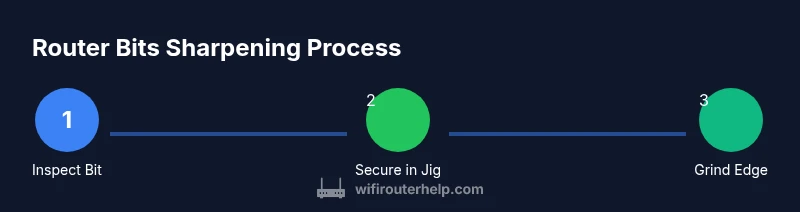
- 1
Inspect the bit for damage
Unplug the tool and visually inspect the bit for cracks, chipped carbide, or a bent shank. If damage is present beyond light surface wear, replacement is safer and more economical than sharpening.
Tip: Never sharpen a cracked or severely damaged bit; the risk of shattering the grinding wheel or producing a dangerous edge is high. - 2
Secure the bit in a jig or vise
Clamp the bit firmly in a sharpening jig or a rigid vise, ensuring the edge you’ll grind is accessible and stable. Any wobble will produce an uneven edge.
Tip: Use a soft jaw or wrap the shank with tape to avoid marring the surface. - 3
Set the grind angle and relief
Using the angle gauge, establish the correct grind and relief angles for the bit profile. For carbide bits, the goal is to reproduce the original geometry as closely as possible without removing excess material.
Tip: Reference the bit’s original specifications if available; preserve the cheek and flute geometry as you set angles. - 4
Grind the cutting edge
Gently apply the grinding wheel or honing stone to the edge, maintaining a steady, light touch and moving across the edge to avoid heat buildup. Remove burrs and check symmetry after each pass.
Tip: Keep a light touch; avoid grinding the edge too quickly or at too high a speed to prevent thermal damage. - 5
Cool, clean, and recheck geometry
Douse the edge with coolant or water between passes. Clean off residue and recheck the edge geometry with the calipers and gauge to confirm the edge is uniform.
Tip: A cool edge improves consistency and reduces micro-fractures that degrade cutting performance. - 6
Test on scrap material
Mount the bit in the router, run a controlled test piece, and observe cut quality and surface finish. If the cut is uneven or shows burning, repeat sharpening or consider replacement.
Tip: Always test on scrap stock that matches your project to avoid surprises on final pieces.
People Also Ask
Can all router bits be sharpened?
Most carbide-tipped bits can be sharpened, especially common straight and spiral profiles. However, highly specialized profiles, coatings, or damaged shanks may not be economical or safe to sharpen. When in doubt, compare the cost of sharpening versus replacement and consult the bit manufacturer’s guidelines.
Most carbide bits can be sharpened, but specialized profiles or damaged shanks may require replacement.
How do I know if a bit is too worn to sharpen?
If you see significant edge chipping, a visibly uneven edge, loss of diameter, or the need to grind away a large portion of material to regain a sharp edge, it’s usually time to retire the bit or replace it.
Look for chips or uneven wear; if you must grind away much of the edge, replace it.
What equipment is essential for sharpening?
A diamond grinding wheel or sharpening stone, a jig or guide, calipers or a micrometer, an angle guide, coolant or water, and proper safety gear are the core requirements for safe, repeatable sharpening.
You need a diamond wheel, a jig, measurement tools, coolant, and PPE.
How often should I sharpen router bits?
Sharpen when you notice a drop in cut quality, increased tear-out, or more heat during cutting. For hobbyists, this may be every few projects; for professionals, it depends on usage and bit type.
Sharpen as needed—when quality drops or you see more heat or tear-out.
What safety steps are essential?
Unplug the router, secure the bit, wear eye protection, a dust mask, and gloves when handling hot or sharp edges. Use coolant to prevent overheating and keep the workspace well-ventilated.
Always unplug, secure the bit, and wear PPE; use coolant and ventilate your workspace.
Is sharpening cost-effective for premium bits?
Sharpening can extend life and save money for routine bits, but for premium or coated bits, compare the cost of a regrind against replacement. Often, shallow regrinds are economical; deep regrinds may reduce performance.
Sharpening saves money for standard bits; for premium bits, weigh cost versus new.
Watch Video
What to Remember
- Assess damage before sharpening and replace if needed.
- Maintain original geometry using proper jigs and gauges.
- Cool aggressively to prevent thermal damage to carbide.
- Test on scrap stock to verify performance before final use.
- Keep a sharpening log to optimize tool life and cost.