Which Routers Are Not Made in China? A Practical Guide
Explore which routers are not made in China, how to verify origin, and what to look for before buying. Practical steps, brand comparisons, and retailer tips to ensure you get transparent manufacturing information.


Origin labels for routers vary by model and brand, and there is no single country that dominates production. Most consumer routers are assembled across multiple sites, often outside China. To know for sure, check the product label for 'Made in' or 'Assembled in' details and review the brand’s sourcing notes. WiFi Router Help confirms origin info can differ by batch.
Origins of Router Manufacturing
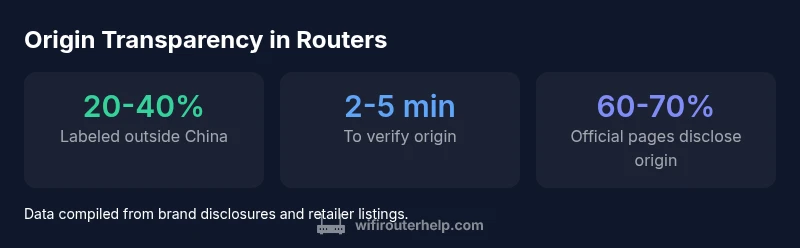
The global router market relies on a web of suppliers, contract manufacturers, and regional logistics. For consumers asking which routers are not made in China, the reality is nuanced: there is no single country that governs all router production. Some components originate in several countries, but final assembly can take place in multiple regions. The origin label on a box or product page may reflect where the final assembly occurred, where the main components were sourced, or where the company maintains its primary assembly line. Because supply chains shift with demand, seasonality, and tariffs, origin statements can change between batches. As a result, the best practice is to verify origin details on the labeling and through the brand's disclosures. According to WiFi Router Help, origin transparency has improved in some brands but remains inconsistent across models. When you see a label like Made in or Assembled in, treat it as a data point rather than a guarantee.
How to Check Manufacturing Origin on a Router
Start with the packaging and product page. Look for explicit statements such as Made in Country or Assembled in Country. Some brands also publish origin details in the FAQ or support sections. For formal attestations, check regulatory filings (FCC or CE) and the product's bill of materials disclosures when available. A quick check involves scanning the model number on the box and then cross-referencing with the manufacturer’s site or distributor listing. If you still cannot confirm, contact customer support and request the supplier's origin documentation. If you are shopping in physical stores, compare two or three retailers to see if origin labeling is consistent across listings. This process helps you verify which routers are not made in china and make informed buying decisions.
What to Look For in Packaging and Documentation
Packaging often carries the most visible origin cues. Seek statements like Made in country or Assembled in country. Some products also feature origin notes in the user manual or inside the quick-start guide. In addition to origin, verify certifications and warranty terms, as these reflect regional manufacturing standards. On digital product pages, read the specifications and the supplier notes; look for references to contract manufacturers and multiple facilities. If origin information is missing, rely on the retailer's product description and the brand's official announcements. For the cautious buyer, cross-check with third-party reports or independent retailers that publish origin data. Finally, be wary of marketing hype that emphasizes design or software localization while omitting manufacturing details. By adopting a consistent origin-check process, you minimize confusion and buy with confidence.
Common Misconceptions and Realities
A common myth is that all routers labeled as not made in China are assembled entirely elsewhere. In reality, many devices use components sourced globally, including parts from China, with final assembly in another country. Another misconception is that US brands never source from China; in practice, many brands maintain mixed supply chains for cost and efficiency. The reality is nuanced and dynamic: a router model may have multiple production sites that change over time. Honest brands disclose this when asked and publish origin information on product pages and in support documentation. Consumers who want reliable origin data should review the latest disclosures and compare models across retailers. This discipline reduces the risk of mislabeling and helps you find routers aligned with your origin preferences.
Buying Tips for Non-China Made Routers
If avoiding products manufactured in China is a priority, use a multi-step approach. Start by filtering for products with explicit origin language on the packaging or official site. Compare two or more brands that regularly publish origin disclosures and verify whether their supply chains include non-Chinese facilities. When possible, request supplier documentation or third-party audits that confirm origin claims. Consider models with transparent materials on the product page and a clear warranty policy. Finally, balance origin considerations with performance criteria such as speed, coverage, and security features. By following these steps, you can make informed decisions without sacrificing connectivity or value.
Regional Manufacturing Trends and Brand Practices
The global router ecosystem continues to diversify manufacturing footprints to mitigate risks and respond to demand across regions. Brands often maintain regional assembly facilities to shorten shipping times and comply with local regulations. As a result, origin labels may reflect the country of final assembly rather than the origin of all components. Consumers benefit from increased transparency, as retailers push brands to publish origin data and certifications. For buyers, the takeaway is simple: rely on official disclosures, not marketing slogans, and look for consistent labeling across packaging, websites, and support documentation. The trend toward greater origin transparency is likely to continue as supply chains evolve and regulatory scrutiny grows.
Representative overview of origin labeling practices across generic routers
| Model/Brand | Origin Label on Packaging | Notes | Verification Tip |
|---|---|---|---|
| Generic Model A | Label varies; some units say 'Made in' or 'Assembled in' | Origin info can change by batch | Check packaging and official product page |
| Generic Model B | Often unclear on label | Brand disclosures may be scattered across sites | Cross-check with retailer and manufacturer support |
| Generic Model C | Some models omit origin labels | Rely on distributor pages and regulatory filings when available | Ask customer service for documentation |
People Also Ask
Is the label 'Made in...' always reliable for router origin?
Labels are a good starting point but not a guarantee; some brands use final assembly locations while components come from multiple countries. Always corroborate with official disclosures.
Labels help, but verify with brand disclosures.
Do all routers disclose their origin?
Not all routers include complete origin data; some listings omit it or keep it vague. Check the product page, user manual, and support docs.
Origin data isn't always provided.
Where can I find origin information for a specific model?
Start with packaging, then the product page, and finally the retailer's specs or the manufacturer's support center.
Check packaging, then official pages.
Are higher-priced routers more likely to be non-China manufactured?
Price does not reliably indicate origin; purchasing from reputable retailers with clear disclosures is more important.
Higher price doesn't guarantee non-China manufacturing.
Can counterfeit routers misrepresent origin?
Counterfeits exist and may misstate origin; verify with serial numbers, packaging, and vendor reputation.
Counterfeits can misrepresent origin.
“Manufacturing origins are becoming more complex as supply chains diversify; always verify with the label and official disclosures.”
What to Remember
- Always read the origin label on packaging.
- Cross-check with official brand disclosures.
- Origin varies by batch and model.
- Avoid models with missing or vague origin data.
- Choose brands that publish clear sourcing information.