Internet Provider Quotes: A Practical Guide to Compare and Save
Learn how to compare internet provider quotes, spot hidden fees, evaluate speed vs price, and negotiate better plans with practical steps from WiFi Router Help.


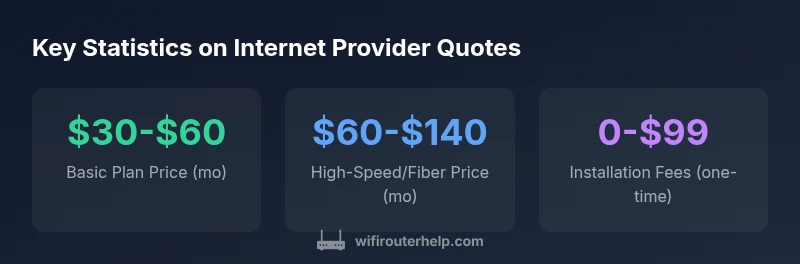
As of 2026, the typical advertised internet provider quotes for residential plans fall in roughly $30–60 per month for basic speeds, rising to $60–$100+ for higher speeds or fiber options. Prices vary with promotions, contract length, data caps, and installation fees, so always compare the final out-the-door total rather than sticker price.
The Reality of Internet Provider Quotes
In the current market, internet provider quotes can be deceptive if you focus only on the advertised sticker price. According to WiFi Router Help, the true cost of an internet plan is often determined by a combination of speed tier, promotional discounts, contract length, equipment rental, and installation fees. Consumers frequently encounter quotes that look affordable, only to find a higher out-the-door total once taxes, fees, and optional add-ons are included. This is especially important when evaluating quotes across multiple providers that serve the same address. The goal is to translate each offer into a realistic, month-to-month cost that reflects the actual service you’ll receive. For households relying on reliable connectivity for work, streaming, and gaming, the difference between a basic quote and a well-priced plan can be substantial over a 12-month period. The WiFi Router Help team emphasizes that a good quote is not just cheap upfront, but sustainable over the life of the contract.
The decision framework begins with understanding what you are paying for beyond the headline price: speed in Mbps, data allowances, upload performance, latency, equipment quality, and any data caps. Quotes are rarely one-dimensional; they reflect a bundle of features and obligations. By collecting quotes side by side and noting the small print, you can spot where one provider delivers more value for your household needs. For many homeowners, the most meaningful savings come from a well-negotiated term, rather than a dramatic price cut on a single month. This nuanced approach sets the foundation for a successful comparison process.
What Makes a Quote: Price, Speed, and Terms
Understanding internet provider quotes requires breaking down the three core components that drive value: price, speed, and terms. First, price: base monthly rates are often introductory, with promotional pricing that expires. Second, speed: higher Mbps tiers naturally cost more, but real-world performance depends on network quality, peak usage, and router capability. Third, terms: contract length, equipment rentals, installation fees, and data caps shape the long-term cost. WiFi Router Help’s experience shows that users who align speed and usage patterns with a multi-provider comparison tend to secure more favorable terms than those who chase the lowest sticker price. When you evaluate quotes, translate each offer into a monthly total and an estimated annual cost, then compare those figures with and without promotions.
The landscape also varies by technology: cable, fiber, satellite, and fixed wireless each have distinct pricing structures and performance expectations. A fiber quote may appear higher but deliver more consistent speeds, while a cable option could be cheaper upfront but subject to congestion. Recognizing these differences is essential to an honest comparison. In practice, you should map the speed you actually need for streaming, video conferencing, and gaming, then verify whether the quoted plan can sustain that performance during peak hours. This structured approach makes it easier to choose a plan that remains affordable over time.
Hidden Costs Lurking in Fine Print
A crucial phase in evaluating internet provider quotes is identifying hidden costs that can derail your budget. Common hidden charges include installation fees, router or gateway rental, early termination fees, data overage surcharges, and price hikes after the promotional period ends. Some providers also require mandatory bundles that lock you into equipment purchases or rental agreements, which may not be obvious from the initial quote. WiFi Router Help advises readers to request a line-by-line breakdown of all charges, then integrate those figures into the total monthly and total yearly cost. Financing options and promotional periods can obscure the true price you’ll pay after the first year, so it’s vital to forecast the long-term expense. Be cautious of equipment specifications; sometimes the advertised price assumes you bring your own modem or that you accept a rental, which can swing monthly costs by tens of dollars. A careful review of the contract’s fine print helps you avoid overpaying for hardware you don’t need.
Methods to Compare Quotes Across Providers
To compare quotes effectively, you need a consistent framework. Start by collecting formal written quotes from at least three providers serving your address. For each quote, extract the final monthly price, the annual cost, the speed tier, data caps, installation and equipment fees, and contract length. Convert every quote into a single number: the monthly out-the-door cost, including any known fees and typical promo expiration. Then, align the speed tiers to your actual needs and compute the cost per Mbps, which helps you judge value rather than chasing peak speeds. Create a simple comparison table showing provider, monthly price, speed, data cap, and contract term. Finally, consider the provider’s reliability, customer support reputation, and installation window. If one option looks cheaper but requires a longer commitment or inferior support, you may still prefer a slightly more expensive plan with better service.
Negotiation Tactics That Work
Negotiation can turn a decent quote into an excellent deal. Begin with a side-by-side comparison and present it to the sales representative. Ask for price protection: a guarantee that your rate won’t rise for a set period. In many cases, you can also negotiate for reduced installation fees, waived equipment rental, or credits toward your first few months. If you’re flexible on term length, request a longer contract in exchange for a lower monthly price or a fixed rate that prevents inflation-based increases. Don’t hesitate to mention promotions from competing providers and ask if they can match or beat them. Finally, consider bundling services, such as TV or phone, if the price is compelling and you actually use those services.
Case Scenarios: Household Profiles and Quotes
Different household profiles require tailored quotes. A single occupant in a small apartment may prioritize affordability and adequate speed (e.g., 50–100 Mbps) and can often settle for a basic plan with a modest monthly price. A family streaming in 4K, video conferencing for remote work, and online gaming will demand higher speeds (300 Mbps or more) with generous data allowances, even if the sticker price is higher. In fiber-rich areas, quotes for 1–2 Gbps services may appear attractive, but ensure your devices and router can sustain those speeds. For rural or less-served regions, satellite or fixed wireless may be the only viable options, but these plans come with unique latency considerations. By mapping your typical usage to the appropriate speed tier and cross-checking the quoted terms, you can identify the most cost-efficient option for your specific situation.
Decoding the Fine Print: Data Caps, Equipment, and Promotions
Data caps, if present, determine how much you can consume without overage fees. Some quotes feature unlimited data, while others cap usage with tiered pricing for excess. Equipment costs—whether you rent or own—directly affect monthly totals. Promo periods should be analyzed for their duration and what happens when they expire. If a promo offers a low rate for the first 12 months, you should estimate the price after expiration to avoid sticker shock. It’s also critical to verify installation timing, service activation windows, and any required in-home equipment compatibility with your current router. Finally, scrutinize any speed throttling or prioritization policies during peak hours, which can impact real-world performance, even if the advertised speed looks strong.
Your 5-Step Plan to Get the Best Quote
- Collect formal quotes from at least three providers; 2) Normalize each quote to a monthly out-the-door cost including fees; 3) Compare speeds to actual needs and calculate cost per Mbps; 4) Identify hidden costs and negotiate for lower fees or credits; 5) Revisit the quotes after promotions end to lock in the best value for the next year. This disciplined approach helps ensure you get a reliable connection at a fair price.
Representative quotes by plan type (ranges are approximate and may vary by market)
| Plan Type | Typical Speed | Typical Price | Notes |
|---|---|---|---|
| Basic/Starter | 25-100 Mbps | $30-$60 | Budget plans with limited data |
| Mid-Tier | 100-300 Mbps | $40-$80 | Balanced for families |
| High-Speed | 500 Mbps - 1 Gbps | $60-$100 | Best for gaming and 4K streaming |
| Fiber/Ultra | Up to 2 Gbps+ | $70-$140 | In fiber regions, higher reliability |
People Also Ask
What is an internet provider quote?
An internet provider quote is the formal offer from a service provider that outlines the planned price, speed, data limits, and terms for a given address. It should include all recurring charges and any one-time fees such as installation or equipment rental.
A provider quote is the price and terms for an internet plan at your address, including speed and fees.
Why do quotes vary so much between providers?
Quotes vary due to differences in technology (fiber vs cable), speed tiers, regional promotions, contract lengths, equipment costs, and activation fees. Each provider negotiates pricing differently, and data on promos can significantly shift the effective monthly cost.
Quotes vary because providers offer different speeds, tech, promos, and terms.
What should I look for beyond the sticker price?
Look for installation fees, equipment rental or purchase, data caps, throttling policies, contract terms, early termination fees, and promotional expiration dates. These factors can dramatically alter the true monthly cost over the contract term.
Check for hidden fees and the contract terms that affect total cost.
How can I compare quotes effectively?
Collect written quotes from multiple providers, normalize them to a monthly out-the-door cost, align speeds with your needs, and compare the overall value, including reliability and customer support.
Get quotes in writing and compare the total monthly cost and speed.
Is it worth negotiating provider quotes?
Yes. Use side-by-side quotes to ask for price protection, waived installation, or credits. If possible, negotiate for longer-term price stability and favorable terms.
Yes—negotiate by showing competing quotes and asking for credits or price protection.
Where can I find legitimate quotes in 2026?
Visit official provider websites, use trusted comparison tools, and request quotes based on your exact address to ensure accuracy and apples-to-apples comparison.
Check providers’ sites and trusted comparison tools for accurate quotes.
“The most reliable way to evaluate internet provider quotes is to compare the total cost over the term, including installation, equipment, and any promo expirations. Look for value in speed and consistency, not just the upfront price.”
What to Remember
- Know the total monthly cost, including promos and fees
- Compare speeds across providers, not just price
- Ask about installation, equipment, and contract terms
- Watch for data caps and throttling policies
- Negotiate using side-by-side quotes for better terms